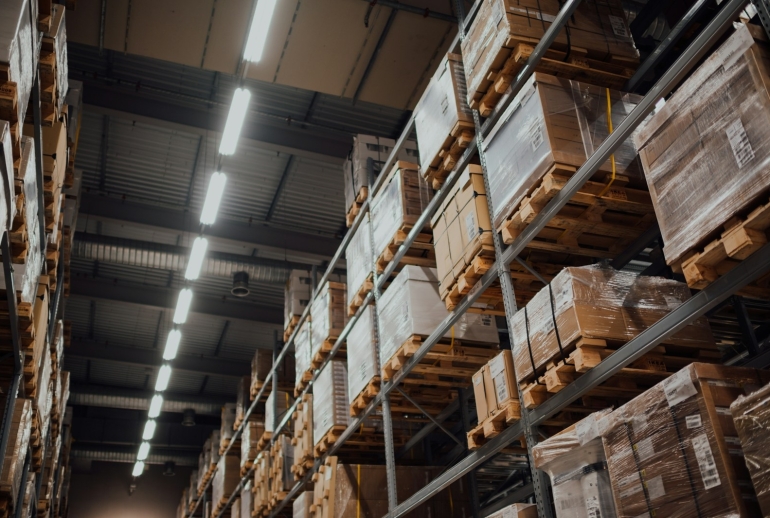
AI training for logistics companies in Malaysia is structured, role-specific upskilling that teaches warehouse, freight, customs and planning teams to apply artificial intelligence tools to the work they already do. For most Malaysian logistics operators the fastest returns do not come from a new AI system at all: they come from training existing staff to use generative AI for documentation, demand forecasting, exception handling and customer communication. Programmes of this type are typically delivered in-house over one to three days and can be structured to be HRD Corp claimable for eligible employers.
I am Dr Muhamad Hariz Bin Muhamad Adnan, a Doctor in Artificial Intelligence, Senior Lecturer at the Faculty of Computing and Meta-Technology, Universiti Pendidikan Sultan Idris (UPSI), and an HRD Corp-certified AI trainer. I design and deliver corporate AI training in Malaysia with a focus on AI-driven digital transformation in the workplace. This guide sets out what AI training looks like specifically for logistics and supply chain organisations.
Why logistics and supply chain teams need AI training now
Logistics is one of the most document-heavy, coordination-heavy sectors in the Malaysian economy. A single shipment can generate booking confirmations, packing lists, commercial invoices, delivery orders, customs declarations and proof-of-delivery records, each passing through several pairs of hands. Every one of those touchpoints involves reading, summarising, re-keying or explaining information, and every one of them is work that generative AI can meaningfully accelerate.
The constraint is rarely the technology. Most freight forwarders, 3PLs and warehousing operators already have staff with Microsoft 365 or Google Workspace accounts that include AI features, and many have already trialled ChatGPT informally. What is missing is a shared, safe, organisation-wide understanding of where these tools help, where they must not be trusted, and how to use them without exposing commercially sensitive shipment or customer data.
That gap is exactly what training closes. Untrained adoption tends to produce two failure modes at once: staff who avoid the tools entirely, and staff who over-trust them and paste confidential manifests into public chatbots.
What generative AI actually changes in a logistics operation
Generative AI refers to AI systems that produce new content, such as text, summaries, code or images, in response to a prompt. In a logistics context, that capability maps onto a specific and fairly predictable set of daily tasks.
Documentation and customs paperwork
Drafting and cross-checking shipping instructions, comparing a commercial invoice against a packing list to spot discrepancies, converting messy customer emails into structured booking details, and translating correspondence between English, Bahasa Melayu and Mandarin. This is usually where a logistics team feels the first week-one win.
Demand forecasting and inventory planning
Explaining what a forecast model is actually telling a planner, drafting scenario narratives for peak season, and helping analysts interrogate their own spreadsheets more quickly. Training here focuses on interpretation and judgement rather than on building models from scratch.
Customer service and track-and-trace
Drafting consistent, professional responses to “where is my shipment” enquiries, summarising a long exception history into a clear customer update, and producing first-draft incident explanations for delays, damage or short-landing.
Standard operating procedures and onboarding
Turning tribal knowledge into written SOPs, generating training material for new warehouse hires, and keeping bilingual documentation in step. For operators with high turnover at the warehouse level, this is often the highest-value use case of all.
Who in a logistics company should be trained
AI training works best when it is segmented by role rather than delivered as one generic session to everyone. In a typical Malaysian logistics organisation I would structure it across four groups:
- Operations and documentation staff — the highest-volume, highest-return group, focused on drafting, checking and summarising.
- Customer service and account teams — focused on tone, consistency and speed of written customer communication.
- Planners and analysts — focused on data interrogation, forecasting literacy and knowing when a model output should not be trusted.
- Management and leadership — focused on where to invest, how to write an internal AI usage policy, and how to govern data risk.
Training leadership alongside operational staff matters more than most organisations expect. If managers cannot evaluate what their teams are producing with AI, quality control quietly disappears.
What a practical AI training programme looks like
A workable in-house programme for a logistics operator generally runs one to three days, hands-on, using the organisation’s own document types rather than generic examples. The structure I recommend:
- Foundation — what generative AI is, what it is not, and why it produces confident errors.
- Applied practice — participants work on their own real shipping documents, customer emails and SOPs.
- Data safety — what must never be pasted into a public tool, and how to work with customer and commercial data responsibly.
- Verification discipline — how to check AI output before it reaches a customer, a customs broker or a regulator.
- Rollout planning — agreeing internal rules so the training survives contact with daily operations.
Sessions can be run onsite at your facility, online, or in hybrid format across multiple branches, which matters for operators split between Port Klang, Penang, Johor and East Malaysia. For a broader view of formats and pricing structures, see my guides on how much corporate AI training costs in Malaysia and in-house AI training for companies.
HRD Corp claimability
The Human Resource Development Corporation (HRD Corp) is the Malaysian statutory body that administers the levy paid by registered employers, which can be claimed back against approved training. For most registered employers, AI training delivered by a certified trainer can be structured as a claimable programme, which materially changes the cost conversation.
Claimability depends on your registration status, the programme scheme used and current HRD Corp requirements, so it should always be confirmed for your specific organisation before you budget. I set out the mechanics in detail in my HRD Corp claimable AI training guide.
Choosing a provider for logistics-specific AI training
Generic AI courses under-perform in logistics because the examples do not match the work. When evaluating providers, ask three questions: will the trainer build the session around our own documents and workflows, can they teach both the practical tool use and the governance side, and can they train non-technical warehouse and operations staff without losing them in jargon?
My own work sits deliberately at that intersection. As an academic researching artificial intelligence and an HRD Corp-certified trainer working with Malaysian organisations, I deliver programmes that are technically accurate but built for people who have never written a line of code. You can read more about my corporate AI training in Malaysia, or compare provider types in my guide on how to choose the right AI training provider.
Frequently asked questions
Do our staff need technical or coding backgrounds?
No. The great majority of value in logistics comes from applied use of generative AI tools by non-technical staff. Programmes are designed for documentation clerks, customer service agents, planners and supervisors, not developers.
How long does AI training for a logistics team take?
Most in-house programmes run one to three days depending on how many roles are covered and whether leadership sessions are included. Shorter half-day awareness sessions are possible but rarely change day-to-day behaviour on their own.
Is AI training for logistics companies HRD Corp claimable?
For eligible registered employers it generally can be structured as claimable, subject to your registration status and current HRD Corp requirements. This should be confirmed for your organisation before budgeting.
Can training be delivered across multiple branches?
Yes. Programmes can be delivered onsite, online or in hybrid format, which is the usual approach for operators with sites in Klang Valley, Penang, Johor and East Malaysia.
What is the difference between this and a general corporate AI course?
A general course teaches the tools. A logistics-specific programme teaches the tools using your shipping instructions, your customer emails and your SOPs, so participants leave with work already improved rather than notes to apply later.
Next step
If you are planning AI upskilling for a logistics, freight forwarding, warehousing or supply chain team in Malaysia, I am happy to scope a programme around your operation and your document types. Get in touch to discuss your requirements and we can work out the right format, duration and claimability route for your organisation.