
Corporate AI training in Penang and Johor is delivered on-site at your own premises, so your team never travels to Kuala Lumpur for it. Dr Muhamad Hariz Muhamad Adnan (drhariz.com), an HRD Corp certified AI trainer and Senior Lecturer at Universiti Pendidikan Sultan Idris (UPSI), delivers this kind of AI training across Malaysia in Bahasa Melayu or English. A trainer comes to you, the workshop is built around the workflows your people actually run, and for levy-contributing employers the programme can normally be structured to be HRD Corp claimable. For most companies outside the Klang Valley, this is both cheaper and more effective than sending a handful of staff to a public course in KL and hoping the knowledge spreads on their return.
This guide covers what on-site AI training looks like in the northern corridor and in Iskandar, how the two regions differ in what they need, and how to scope a programme.
Why location actually matters for AI training
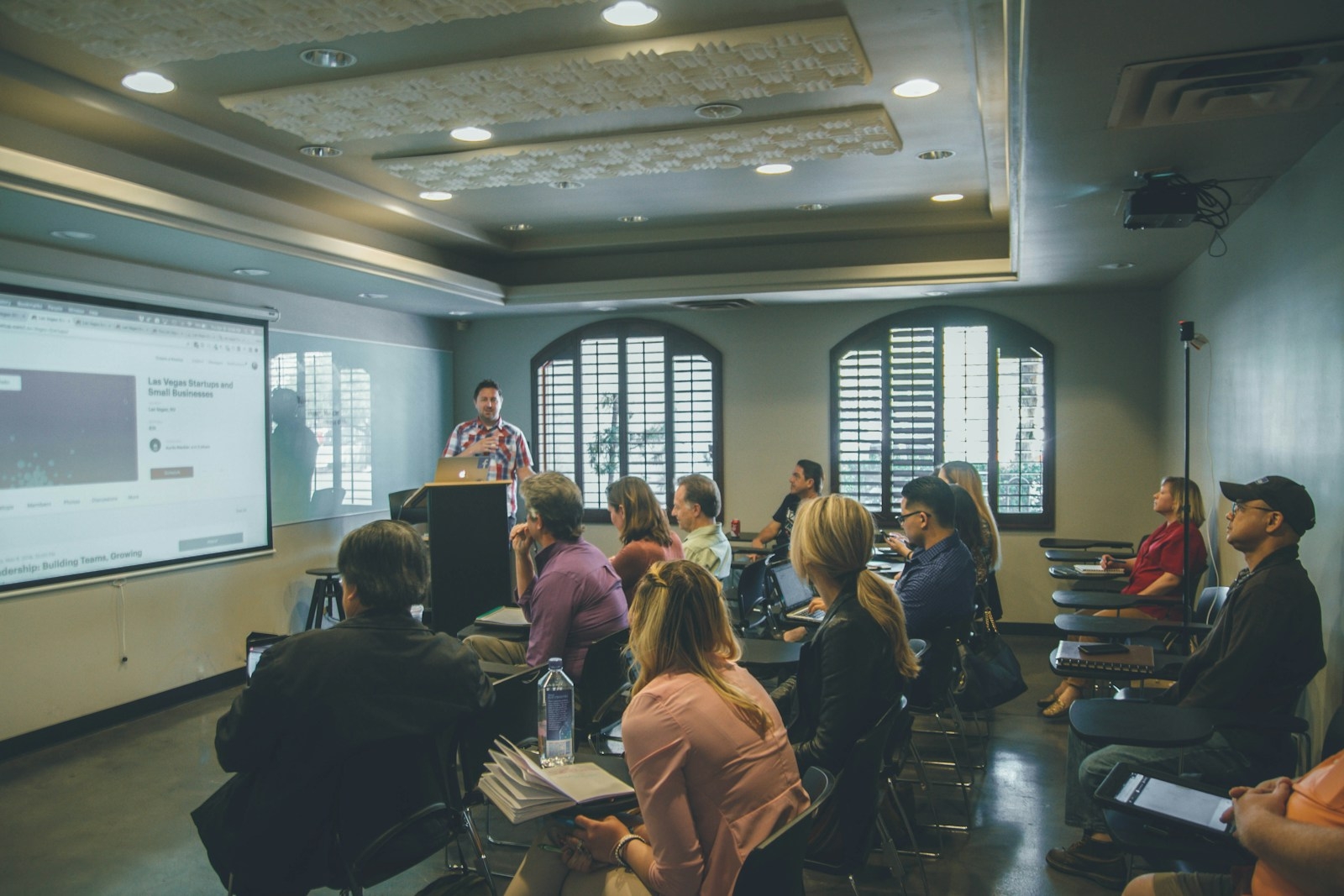
It is tempting to assume AI training is location-neutral because the tools are the same everywhere. In practice, geography changes three things.
Cost per head. Sending eight people from Bayan Lepas or Pasir Gudang to a public course in KL means flights or a long drive, a hotel night, and two days of lost floor time on top of the course fee. Bringing one trainer to your site removes almost all of that. The break-even point usually arrives somewhere around six to eight participants.
Relevance of examples. A public course has to teach to a mixed room. An on-site session for a single company can use that company’s own documents, reports and processes. The exercises stop being hypothetical.
Depth of coverage. Public courses reach individuals. On-site training reaches whole departments at once, which is what actually shifts how work gets done. Two trained people in a team of thirty rarely change anything.
Penang and the northern corridor
Penang’s corporate base is weighted heavily toward electronics and electrical manufacturing, precision engineering, shared services and a growing medical devices cluster, with supporting operations across Kedah and Perak. That shapes what teams ask for.
What Penang teams typically want
- Engineering and quality documentation. Drafting and reviewing work instructions, deviation reports, 8D reports and audit responses. Long-form technical writing is a large hidden time cost in manufacturing, and it is one of the clearest early wins.
- Supplier and customer correspondence. Multinational customers generate constant written back-and-forth. Teams learn to draft to a consistent tone and produce faster, cleaner responses.
- Shared services and back office. Finance, HR and procurement functions serving a regional footprint benefit from summarisation, policy lookup and report drafting.
- Production data commentary. Turning yield, downtime and defect figures into written analysis for management review.
Companies running plant-floor and shift patterns often prefer the workshop split into shorter sessions rather than one continuous two-day block. That is straightforward to accommodate. If your interest is specifically production-side, our guide to AI training for manufacturing companies in Malaysia goes deeper on use cases and ROI.
Johor and Iskandar
Johor’s profile is different. Alongside established manufacturing in Pasir Gudang and Tebrau, the state has seen significant growth in data centres, logistics and cross-border services, plus a substantial base of SMEs supplying both local and Singapore-linked demand.
What Johor teams typically want
- Logistics and supply chain communication. Shipment exception handling, customer updates and documentation review.
- SME whole-team upskilling. Smaller firms often want everyone trained at once rather than a specialist track, because roles overlap.
- Bilingual and cross-border correspondence. Producing English and Bahasa Melayu versions of the same document quickly, and adapting register for different counterparties.
- Sales and proposal work. Faster first drafts of quotations, proposals and follow-up sequences.
Johor’s proximity to Singapore also means many teams have already encountered AI tools informally through customers or partners. Those groups usually need less introduction and more structure: which tool for which job, and where the boundaries sit.
What the workshop covers
The core programme is designed for non-technical staff and does not require any coding background. A typical one to two day on-site session covers:
- What Generative AI is and is not. Generative AI creates new text, images or analysis from a prompt rather than retrieving a stored record. Understanding this is what stops people treating it as a search engine and trusting output they cannot verify.
- Prompting that survives real work. Structure, context, examples and iteration, practised on the team’s own tasks rather than on toy problems.
- Department workflows. Each function maps two or three recurring tasks and rebuilds them with AI support.
- Verification and quality control. How to check output, what to never accept unchecked, and how to keep a human accountable for anything that leaves the building.
- Data handling and internal policy. What may and may not be entered into which tools, aligned to your own rules.
- A written follow-through plan. The specific workflows each department commits to running after the session.
Full format and scheduling detail is on the corporate AI training page. Schools, colleges and universities in either state can also arrange education-focused sessions through AI for education.
About the trainer
Dr Muhamad Hariz Bin Muhamad Adnan holds a doctorate in Artificial Intelligence and is a Senior Lecturer at the Faculty of Computing and Meta-Technology, Universiti Pendidikan Sultan Idris (UPSI). He is an HRD Corp-certified AI trainer in Malaysia, focused on AI-driven digital transformation in education and the workplace. Sessions are delivered personally rather than subcontracted, which is why the syllabus can be rebuilt around your own workflows before the training date.
Frequently asked questions
Do you actually travel to Penang and Johor, or is it online?
Both are available. On-site delivery at your premises is the default for corporate engagements because it produces better results. Virtual delivery is an option for distributed teams or for follow-up sessions after an initial on-site workshop.
Is there a travel surcharge outside the Klang Valley?
Travel and accommodation are quoted transparently as part of the proposal rather than hidden in the day rate. For a group of reasonable size, the total still lands well below the cost of sending the same group to a public course in KL.
What is the minimum and maximum group size?
In-house training is usually most economical from around eight participants upward. Larger groups can be split into parallel or sequential cohorts so that hands-on time per person stays high. Share your headcount and you will get a format recommendation with the quotation.
Can this be claimed under HRD Corp?
For employers registered with HRD Corp and contributing to the levy, in-house AI training can generally be structured as a claimable programme. Confirm the claim route before locking in dates, since the application takes time. See how HRD Corp claimable AI training works for the full process.
How far ahead should we book?
Allow enough lead time for two things: the HRD Corp application if you are claiming, and a scoping conversation so the syllabus can be adapted to your workflows. Booking several weeks ahead rather than days gives you both.
We are in Melaka, Kedah or Perak, not Penang or Johor. Is that covered?
Yes. On-site delivery is available nationwide. The northern corridor and Iskandar are simply the two clusters outside the Klang Valley with the most demand, which is why they are covered specifically here. Klang Valley companies should see corporate AI training in Kuala Lumpur and Klang Valley.
Next step
Tell us your location, team size, the departments involved and roughly when you want the training to run. Send those details here and you will get back a syllabus outline, a format recommendation and a quotation you can put through your HRD Corp application.
Choosing a partner for Penang or Johor delivery usually comes down to the person standing in front of the room. Dr Muhamad Hariz Adnan works as an AI trainer in Malaysia across all states, combining a doctorate in artificial intelligence with hands-on facilitation for non-technical teams.
Related: AI Training for Sabah and Sarawak Companies (2026)
About the author
Dr Muhamad Hariz Muhamad Adnan is a Doctor in Artificial Intelligence, Senior Lecturer at the Faculty of Computing and Meta-Technology, Universiti Pendidikan Sultan Idris (UPSI), and an HRD Corp certified AI trainer in Malaysia focused on AI-driven digital transformation in education and the workplace. Contact Dr Hariz for corporate or education AI training.
Related: Corporate AI Training in Perak (2026): Ipoh, Tanjong Malim and Kampar