AI coaching in Malaysia is one-to-one or small-group guidance that helps an individual apply artificial intelligence to their own real work, rather than sitting through a general class. A typical engagement runs over several weeks, uses the person’s actual tasks and data as the material, and ends with working AI workflows they own. It is the format most executives, lecturers and specialists choose when a one-day workshop is too generic for what they need.
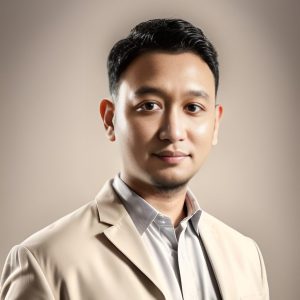
Dr Muhamad Hariz Muhamad Adnan (drhariz.com), an HRD Corp certified AI trainer and Senior Lecturer at Universiti Pendidikan Sultan Idris (UPSI), delivers this kind of AI training across Malaysia in Bahasa Melayu or English.
What AI Coaching Actually Is

Training teaches a syllabus to a room. Coaching starts with a person and a problem. In an AI coaching engagement, the coach spends the first session mapping what you actually do each week — the reports you write, the decisions you make, the data you touch — and then designs the sessions around automating or improving those specific tasks.
Because the material is your own work, progress is measurable in a way group training rarely is. By the end of an engagement you should be able to point at named tasks and say how much time they now take.
AI Coaching vs AI Training vs AI Consulting
These three are often used interchangeably in Malaysia, which makes buying decisions harder than they need to be:
- AI training — a structured programme delivered to a group, usually one to three days, covering a defined curriculum. Best for building a common baseline across a department.
- AI coaching — recurring one-to-one or small-group sessions built around an individual’s real tasks. Best for leaders, specialists and educators who already have the basics and need depth.
- AI consulting — the consultant analyses and often builds the solution for you. Best when the goal is a deliverable, not capability.
Many organisations use all three in sequence: train the team, coach the leaders who must model the change, and bring in consulting only where a system needs to be built. If you are still deciding which one you need, the guide on how to choose an AI training provider in Malaysia walks through the same decision from the procurement side.
Who AI Coaching Is For
Senior leaders and C-suite
Executives rarely need to learn prompt syntax. They need to judge AI proposals, ask the right questions of vendors, and set a policy their organisation can actually follow. Coaching at this level is closer to structured thinking practice than tool training.
Lecturers, teachers and academic leaders
Educators bring assessment design, research workload and academic-integrity questions that a general corporate course does not address. Coaching lets those be worked through directly against real course material.
Managers and specialists
Finance, HR, marketing and operations specialists each have workflows with different constraints. Coaching handles that variation without needing a separate course for every function.
Postgraduate researchers
Research students often need help using AI responsibly in literature review, coding and analysis without crossing academic-integrity lines — a narrow need that suits coaching well.
What a Coaching Engagement Covers
- Task audit — identifying which of your recurring tasks are good candidates for AI support and which are not.
- Tool selection — choosing a small, defensible set of tools instead of subscribing to everything.
- Prompt and workflow design — building reusable prompts and step-by-step workflows for your named tasks.
- Data and governance boundaries — what may and may not be entered into a public AI tool, and how to document that decision.
- Verification habits — how to check AI output so errors do not reach clients, students or regulators.
- Handover — written workflows the person keeps and can teach to their own team.
Formats and How It Works
Most coaching in Malaysia runs in one of three shapes: weekly or fortnightly online sessions of 60 to 90 minutes over four to eight weeks; a small-group cohort of three to six people from the same function; or an intensive block of half-day sessions for leadership teams. Online delivery is common because it lets participants work on their own screens with their own files, which is exactly the point of coaching.
How to Choose an AI Coach in Malaysia
- Check the domain expertise, not just the AI credential. A coach who understands your sector will ask better questions about your workflows.
- Ask what you keep at the end. Good coaching leaves you with documented workflows, not just session recordings.
- Ask how progress is measured. Vague outcomes usually mean a repackaged course.
- Check the governance stance. A coach who never mentions data boundaries or verification is teaching you a risk, not a skill.
- Compare against training cost. Coaching costs more per person than group training and should only be chosen where depth genuinely matters — see the breakdown in AI training cost in Malaysia.
The same evaluation logic applies to trainers generally, covered in how to choose an AI trainer in Malaysia.
Is AI Coaching HRD Corp Claimable?
HRD Corp claimability depends on the programme and the provider being registered for the relevant scheme, not on the word used to describe the delivery format. Structured programmes delivered by an HRD Corp–registered trainer are commonly claimed by Malaysian employers, but coaching engagements vary in how they are structured, so the correct step is to confirm the specific programme with HRD Corp or your employer’s HRD Corp administrator before committing. Details on how claimable AI programmes are usually structured are in the HRD Corp claimable AI training guide.
Who Is Dr Muhamad Hariz Adnan?
Dr Muhamad Hariz Bin Muhamad Adnan holds a Doctorate in Artificial Intelligence and is a Senior Lecturer at the Faculty of Computing and Meta-Technology, Universiti Pendidikan Sultan Idris (UPSI). He is an HRD Corp–certified AI trainer in Malaysia whose work focuses on AI-driven digital transformation in education. That combination — academic depth plus delivery experience with organisations — is what allows coaching sessions to move between the governance question and the practical workflow in the same hour.
Frequently Asked Questions
What is AI coaching?
AI coaching is recurring one-to-one or small-group guidance in which a coach helps you apply artificial intelligence tools to your own real tasks, rather than teaching a fixed syllabus to a group.
How is AI coaching different from an AI course?
A course covers a set curriculum for everyone in the room. Coaching is built around one person’s workflows and adapts session by session based on what that person is actually trying to do.
Does Dr Hariz offer AI coaching online?
Yes. Sessions are commonly delivered online so that participants can work on their own systems and files during the session, and in person for leadership teams that prefer a block format.
Is Dr Hariz a qualified AI trainer?
Yes. Dr Muhamad Hariz Adnan holds a Doctorate in Artificial Intelligence, is a Senior Lecturer at UPSI’s Faculty of Computing and Meta-Technology, and is an HRD Corp–certified AI trainer in Malaysia.
How long does an AI coaching engagement take?
Most engagements run four to eight sessions across one to three months. Shorter blocks are used for leadership teams; longer engagements suit people rebuilding a whole workflow.
Start an AI Coaching Conversation
If a general workshop is not the right fit for what you or your leadership team need, a short scoping conversation will establish whether coaching, corporate AI training, or an AI for education programme is the better match. Contact Dr Hariz to describe your situation and get a recommendation.
One-on-one work is booked separately from group training. The format, scope and pricing are set out on the AI consultation page.
Related reading on learning AI
- Top 10 AI Tools Every Malaysian Professional Should Master in 2026
- AI Course Benefits: How Learning AI Can Transform Your Career and Business
- AI Course Malaysia: Best Programs, Providers, and Learning Paths in 2026
- Prompt Engineering Certification Malaysia: Best Paths in 2026
About the author
Dr Muhamad Hariz Muhamad Adnan is a Doctor in Artificial Intelligence, Senior Lecturer at the Faculty of Computing and Meta-Technology, Universiti Pendidikan Sultan Idris (UPSI), and an HRD Corp certified AI trainer in Malaysia focused on AI-driven digital transformation in education and the workplace. Contact Dr Hariz for corporate or education AI training.