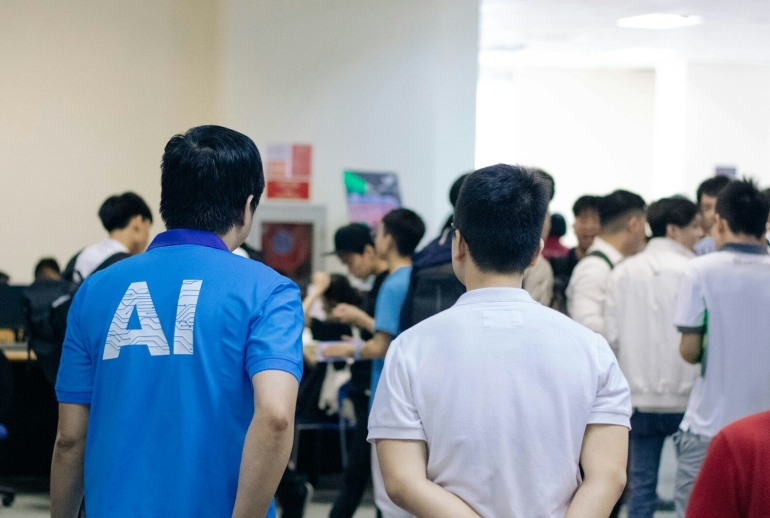
What Does an AI Trainer Do?
An AI trainer is responsible for teaching AI systems to understand and respond to data accurately. This involves curating training datasets, labeling data, testing AI model outputs, providing corrective feedback, and fine-tuning model parameters. AI trainers work with various types of AI including language models, image recognition systems, and recommendation engines.
Types of AI Trainer Roles
The AI trainer profession encompasses several specialized roles. Data annotation specialists focus on labeling training data for machine learning models. Conversational AI trainers specialize in improving chatbot and virtual assistant responses. Computer vision trainers work on image and video recognition tasks. RLHF (Reinforcement Learning from Human Feedback) trainers provide direct feedback to improve large language models like GPT and Gemini.
How to Become an AI Trainer
Becoming an AI trainer requires a combination of education and practical experience. Start by building a solid understanding of machine learning fundamentals and programming languages like Python. Gain experience through online platforms that offer AI training tasks such as Remotasks, Appen, and Scale AI. Develop expertise in specific AI domains and continuously learn about new developments in artificial intelligence technology.
AI Trainer Salary and Job Outlook
The demand for AI trainers is growing rapidly across the globe. AI trainer salaries vary based on experience, specialization, and location. Entry-level AI trainers can expect competitive compensation, while experienced professionals with specialized skills in areas like RLHF or domain-specific AI training command premium rates. The job market for AI trainers is projected to grow significantly through 2030 as more companies invest in AI development.
The Malaysian AI Trainer Market in 2026
Demand for AI trainers in Malaysia has shifted from curiosity to procurement. Two or three years ago most enquiries were for awareness sessions; today the majority are for role-specific programmes — AI for HR, for finance, for manufacturing supervisors, for lecturers — with an expectation that participants leave able to do something concrete. The HRD Corp levy system is a large part of why the market is structured this way: employers who can claim eligible training against their levy tend to commission structured, outcome-defined programmes rather than one-off talks.
That has consequences for anyone entering the field. Generalist “intro to AI” trainers are increasingly commoditised, while trainers who can speak credibly to a specific function or sector command better rates and repeat work. The sector-specific posts on this site — for example AI training for HR teams and AI training for manufacturing companies — illustrate how differently the same underlying skills need to be packaged.
Skills That Separate Good AI Trainers from Great Ones
Technical knowledge is the entry ticket, not the differentiator. The trainers who get invited back share a narrower set of strengths:
- Translation. Explaining a transformer, a hallucination or a governance risk in the language of the room, without dumbing it down into something false.
- Diagnosis. Reading a client’s actual workflow and identifying the two or three tasks where AI will help, rather than demonstrating twenty tools.
- Honesty about limits. Saying clearly where AI should not be used. This builds more trust than any demo.
- Facilitation. Handling a room containing both an enthusiastic 24-year-old and a sceptical 55-year-old, and getting both to a working output.
- Currency. Rebuilding material every few months, because the tool landscape genuinely changes that fast.
How to Get Your First AI Training Clients
Most new AI trainers underestimate how much of the work is proof rather than pitch. Before approaching organisations, build a small body of visible evidence: a public workshop, a documented case where you automated something real, a short article that answers a question buyers actually ask. Then start where you have credibility — your own industry, your alumni network, professional associations — rather than cold-approaching enterprises with no reference point.
Understanding how buyers evaluate you is the fastest shortcut. Read the market from the client side in how to choose an AI trainer in Malaysia and how providers are compared, then make sure your own credentials answer those questions. The AI trainer qualifications guide covers the certification side.
Conclusion
The AI trainer career path offers tremendous potential for growth and impact. As artificial intelligence becomes more embedded in our daily lives, the need for skilled AI trainers will only increase. Whether you are a technology professional looking to transition into AI or a student exploring career options, becoming an AI trainer can be a highly rewarding choice.
Related: AI keynote speakers in Malaysia.
Some AI trainer career paths lead into academia or research leadership, where a doctorate becomes valuable. See the complete guide to a PhD in artificial intelligence for entry requirements, timelines and career outcomes.
Frequently Asked Questions About the AI Trainer Career
Do I need a PhD to become an AI trainer?
No. A doctorate helps in academic and research-adjacent settings and adds credibility in higher education, but most corporate buyers weigh demonstrated delivery experience, sector understanding and relevant certification more heavily than a specific degree.
How do AI trainers in Malaysia get paid?
Common models are per-day workshop fees, programme fees for multi-session engagements, retainers for ongoing enablement, and revenue share on public courses. Corporate engagements delivered under an HRD Corp–registered programme are typically priced per programme rather than per hour.
Is AI training a sustainable career or a temporary boom?
The tools change constantly, which is precisely why demand persists: organisations need someone to re-orient them every cycle. The risk is not that demand disappears but that undifferentiated trainers get squeezed. Specialisation by sector or function is the durable position.
What background do most successful AI trainers come from?
There is no single path. Practising academics, data practitioners, consultants and experienced domain professionals who moved into AI all succeed — usually by pairing genuine AI understanding with deep familiarity with one audience.
Work With a Certified AI Trainer in Malaysia
Dr Muhamad Hariz Adnan is a Doctor in Artificial Intelligence, a Senior Lecturer at the Faculty of Computing and Meta-Technology, Universiti Pendidikan Sultan Idris (UPSI), and an HRD Corp–certified AI trainer. If your organisation is looking for role-specific AI training rather than a generic overview, see corporate AI training in Malaysia or get in touch.
If you want to see what the role looks like day to day, this is the practice of a working AI trainer in Malaysia.