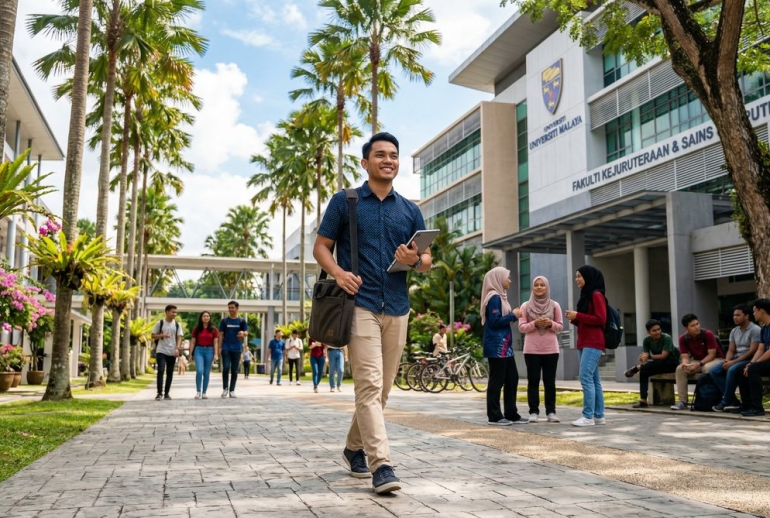
What does it actually feel like to be a postgraduate AI research student in Malaysia? For prospective students considering a Master’s or PhD in AI at Universiti Pendidikan Sultan Idris (UPSI), understanding the day-to-day reality of research life is essential for making an informed decision. This article offers a window into the life of an AI research student supervised by Dr. Muhamad Hariz Muhamad Adnan at UPSI’s Faculty of Computing. From research routines to campus life in Tanjung Malim, this narrative is designed to be both aspirational and realistic.
Morning: Research and Reading
A typical day begins with focused research work. Most postgraduate students at UPSI dedicate their mornings to literature review, reading recent publications in their research area, and taking structured notes. For an AI research student, this means staying current with the rapidly evolving landscape of machine learning, generative AI, and domain-specific AI applications. Students use tools like Google Scholar, Scopus, and Connected Papers to discover and track relevant publications. Research management tools such as Mendeley or Zotero help organize references that will eventually appear in thesis chapters and journal papers. Dr. Hariz encourages his students to maintain a research journal documenting insights, questions, and ideas that emerge from their reading. This practice builds the critical thinking habit essential for producing original research contributions.
Late Morning: Experiment and Development
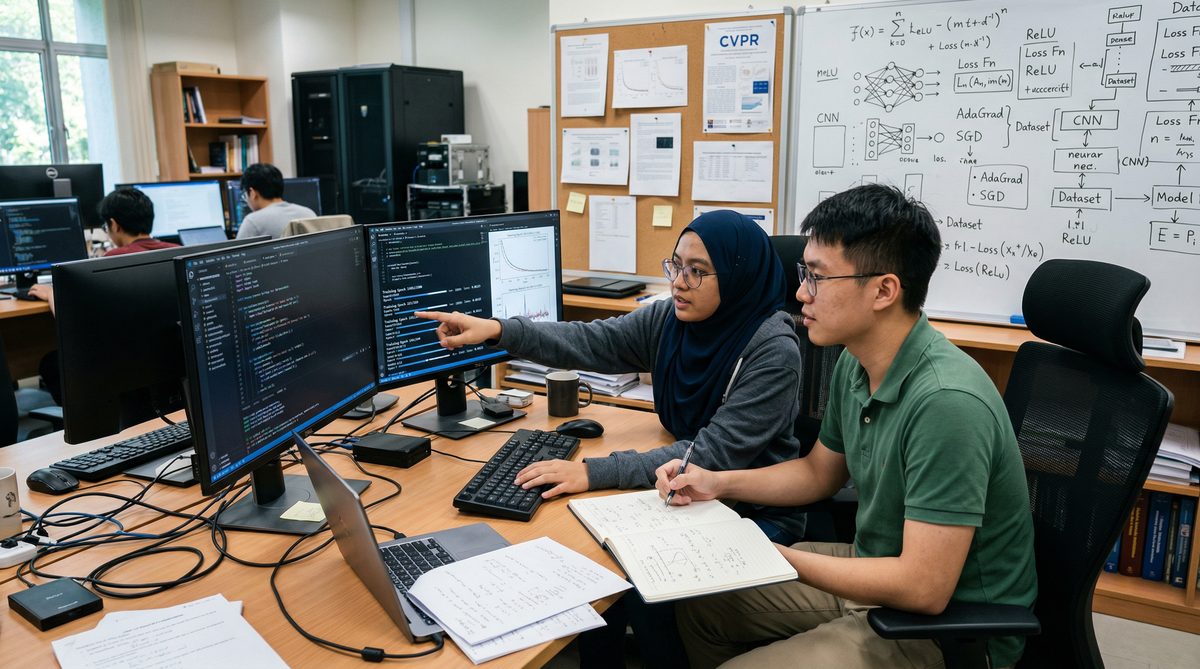
Late mornings are typically dedicated to hands-on research work. Depending on the student’s research stage, this could involve designing research instruments, developing AI models or prototypes, processing and analyzing data, or writing thesis chapters. For students working on AI in precision agriculture, this might mean processing satellite imagery, training computer vision models, or analyzing sensor data from field experiments. For those researching generative AI in education, it could involve designing and deploying surveys, conducting interviews with teachers, or testing AI tools in educational contexts. UPSI provides access to computing resources for AI research, including high-performance computing facilities and cloud computing credits. Students can also access research software and statistical analysis tools through the university’s institutional licenses.
Afternoon: Collaboration and Supervision
Supervisor meetings are a cornerstone of postgraduate life. Dr. Hariz schedules regular meetings with his students—typically weekly or biweekly—to review progress, discuss challenges, provide feedback on drafts, and guide research direction. These meetings are collaborative rather than hierarchical. Students present their latest findings, and the supervisor provides expert guidance while encouraging independent thinking. The goal is to develop the student’s ability to conduct research autonomously. Afternoons also include collaboration with fellow postgraduate students. Research seminars, journal clubs, and peer review sessions create a supportive community where students learn from each other’s expertise and challenges.
Publication and Professional Development
Publishing research papers in indexed journals is a key component of postgraduate study at UPSI. Dr. Hariz actively guides his students through the publication process—from identifying suitable journals and conferences to structuring manuscripts and responding to peer reviews. Master’s students are expected to produce at least one journal publication, while PhD students typically target three or more publications during their candidature. These publications not only fulfill graduation requirements but also build the student’s professional reputation in the AI research community. Professional development extends beyond publications. Students attend conferences, participate in workshops, and develop skills in academic writing, presentation, and research methodology. Some of Dr. Hariz’s students also gain industry exposure through his consulting and training network.
Campus Life in Tanjung Malim
UPSI is located in Tanjung Malim, a small town in Perak about 100 kilometers north of Kuala Lumpur. The campus offers a focused, distraction-free environment ideal for research, with significantly lower living costs compared to universities in the Klang Valley. Postgraduate students have access to modern library facilities, on-campus accommodation options, sports and recreational facilities, and a supportive student services department. The relatively compact campus fosters close-knit academic communities within faculties. The town itself offers essential amenities—restaurants, shops, and healthcare facilities— while the proximity to Kuala Lumpur via highway provides easy access to the capital when needed for conferences, industry meetings, or personal needs.
Skills Gained During the Journey
An AI research degree at UPSI equips students with a powerful combination of technical and soft skills:
- Advanced AI and machine learning competencies in their specialized research area.
- Research methodology skills: systematic literature review, experimental design, data
analysis.
- Academic writing and publication experience in indexed journals.
- Critical thinking and problem-solving abilities honed through original research.
- Presentation and communication skills developed through seminars and
conferences.
- Professional networking within the Malaysian and international AI research
community.
Frequently Asked Questions
What is it like studying AI at UPSI?
Studying AI at UPSI combines focused research work, regular supervisor guidance,
collaborative peer learning, and a supportive campus environment in Tanjung Malim. Students develop strong technical and research skills while contributing to publications in their field.
How often do you meet your supervisor?
Students supervised by Dr. Hariz typically meet weekly or biweekly for structured
supervision sessions. Additional communication happens via email and messaging for urgent questions or quick feedback.
Can I publish research as a Master’s student at UPSI?
Yes, Master’s students at UPSI are expected to publish at least one journal paper. Dr.
Hariz guides students through the entire publication process, from manuscript preparation to journal submission and peer review response.
What facilities does UPSI have for AI research?
UPSI provides computing resources, cloud computing access, research software
licenses, modern library facilities, and dedicated research spaces in the Faculty of Computing. Students also benefit from institutional journal subscriptions and research database access.
Call to Action
Ready to start your AI research journey? Dr. Hariz is accepting Master’s and PhD students for the upcoming intake. Visit drhariz.com/postgraduate to learn about research areas, funding, and how to apply.
About the Author
Dr. Muhamad Hariz Muhamad Adnan is a Senior Lecturer at Universiti Pendidikan Sultan Idris (UPSI), certified AI trainer, and digital transformation consultant. He holds a Ph.D. in Information Technology from Universiti Teknologi PETRONAS (UTP) and specializes in AI in education, precision agriculture, and generative AI applications. Connect with him at drhariz.com.
Related Articles
- Tips on choosing the right AI supervisor.
- including emerging AI research topics in Malaysia.
Research supervision and guidance
Dr Muhamad Hariz Bin Muhamad Adnan is a Doctor in Artificial Intelligence and Senior Lecturer at the Faculty of Computing and Meta-Technology, Universiti Pendidikan Sultan Idris (UPSI), and an HRD Corp-certified AI trainer in Malaysia. If you are shaping a postgraduate research direction in AI, see the research supervision scope or get in touch to discuss your topic.