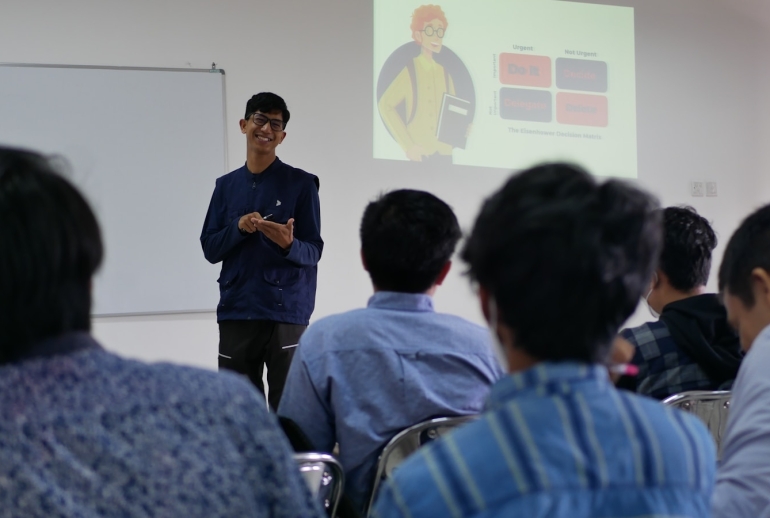
Can university lecturers become effective corporate trainers? Yes — and an evidence-based UPSI feasibility study of 19 IT lecturers shows the transition is feasible when the right gaps are closed. This article distils the data, the competence profile, and a five-bridge framework that turns deep academic expertise into industry-ready training capability for the Malaysian market.
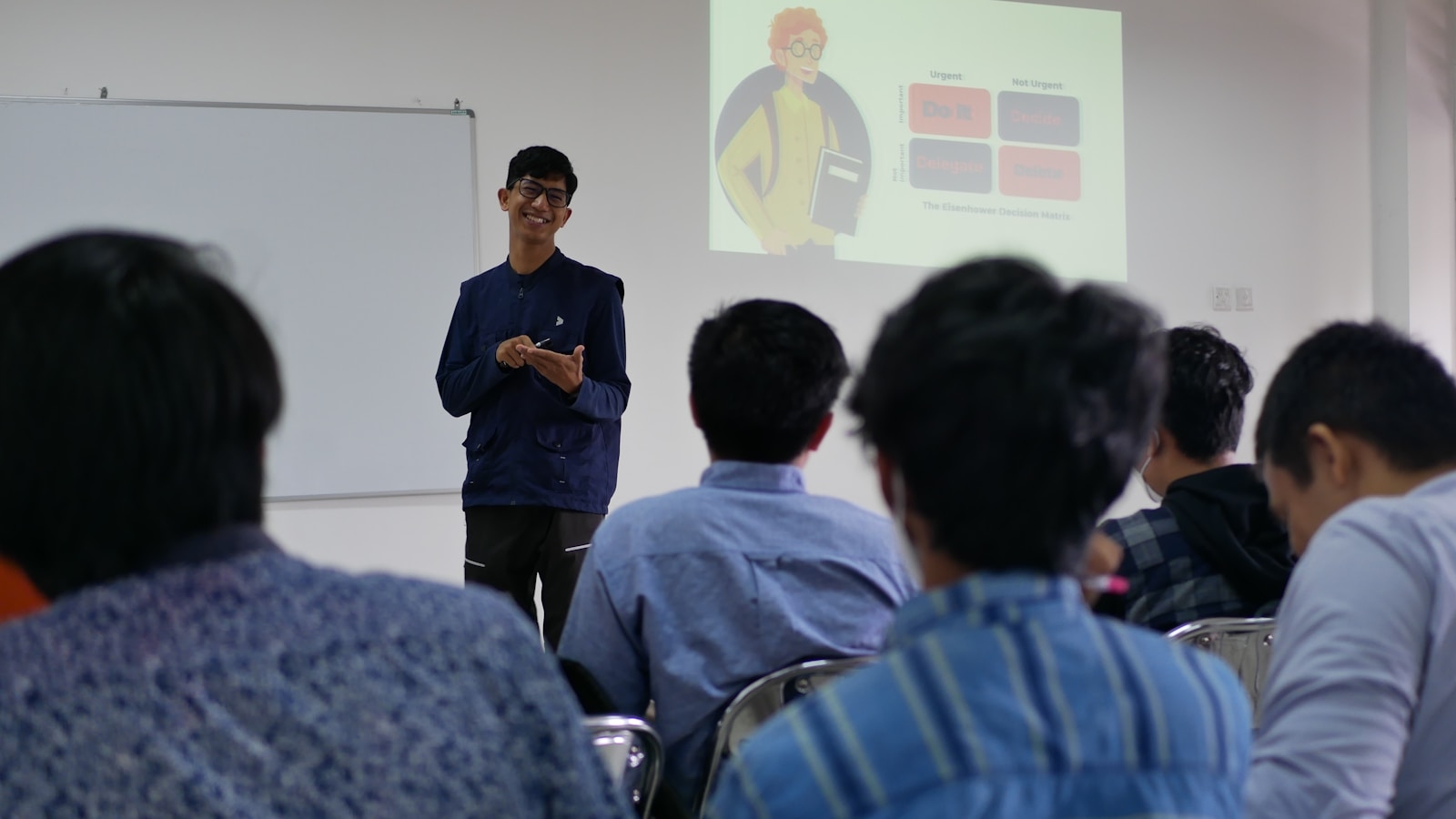
Walk into any university lecture theatre and you will find deep subject expertise, polished slides, and years of teaching craft. Walk into a corporate training room and you will find something subtly different: working professionals who want immediately applicable skills, measured against business outcomes rather than examination grades. The distance between these two rooms is shorter than it looks — but it is not zero. As Malaysia accelerates toward an Industry 4.0 economy, the question of whether academic lecturers can step confidently into the role of corporate trainer has become both a career opportunity for individual academics and a strategic priority for universities.
This article draws on a recent feasibility study conducted under the Universiti Pendidikan Sultan Idris Translational Research Grant (TR@UPSI), titled “From Teaching to Training: Developing a Framework to Upskill Lecturers into Corporate Trainers.” Rather than treating the transition as a matter of motivation alone, the study put real numbers to the question — surveying lecturers, measuring their competencies across three dimensions, and identifying exactly where the gaps lie. What follows is a synthesis of those findings, set against the wider landscape of adult learning, HRD Corp certification, and the rise of AI in corporate training. Visit drhariz.com for more on Dr. Muhamad Hariz Muhamad Adnan’s work in this space.
Why does the lecturer-to-trainer question matter now?
The lecturer-to-trainer question matters because Malaysia’s Industry 4.0 transformation has created an acute shortage of trainers who can bridge academic knowledge and workplace application. Universities hold a vast pool of expertise, and unlocking it through structured upskilling directly serves the national digital workforce agenda.
The National Industry 4.0 Policy Framework explicitly identifies the strengthening of education and training systems as a critical pillar of digital workforce development, and bodies such as TalentCorp have repeatedly called for deeper industry-academia collaboration. The very lecturers who teach the next generation of professionals are well positioned to train the current one.
Yet a structural mismatch persists. University teaching is built on pedagogy — the instruction of students within a structured curriculum. Corporate training is built on andragogy, the science of adult learning articulated by Malcolm Knowles, in which learners are self-directed, draw on substantial life experience, and demand relevance and immediate applicability. A lecturer who masters pedagogy does not automatically master andragogy. Recognising that distinction is the first step in any serious upskilling effort, and it framed the entire UPSI investigation.
What did the UPSI feasibility study actually reveal?
The UPSI feasibility study surveyed 19 highly qualified Information Technology lecturers and measured three competence dimensions. Skills (4.41) and knowledge (4.40) scored strongly, but industrial experience collapsed to a median of just 2.00 — a clear, data-driven signal that exposure and credentialing, not ability, are the real bottleneck.
The sample was experienced and highly qualified — seventeen held PhDs, two held master’s degrees, and most were aged between 41 and 50. Competence was measured across three dimensions: experience, skills, and knowledge, with responses analysed in SPSS. The results tell a clear and instructive story.
The competence profile at a glance
| Competence Dimension | Median Score (max 5) | Readiness Signal |
|---|---|---|
| Skills (pedagogical & digital) | 4.41 | Strong |
| Knowledge (subject & technology) | 4.40 | Strong |
| Experience (industry & corporate training) | 2.00 | The bottleneck |
Table 1. Overall competence summary across 19 UPSI IT lecturers (median, 5-point scale).
Finding 1: Skills and knowledge are already there
On the dimensions universities are built to develop, lecturers scored impressively:
- Confidence using digital delivery tools (Zoom, Google Meet): 4.79
- Problem-solving in teaching: 4.68
- Respect for privacy and professional ethics: 4.63
- Reflective practice after teaching: 4.53
- In-depth IT knowledge and tracking technological developments: 4.42
In short, the raw pedagogical and technical horsepower for corporate training is not in question.
Finding 2: The real gap is industrial experience
The experience dimension collapsed to a median of just 2.00. Most respondents had never conducted corporate training, had minimal industry training attendance (median 1.95), and limited exposure to public industry talks (1.79). Crucially, possession of a formal corporate trainer certificate scored only 1.95 — the single clearest indicator that, despite their expertise, these lecturers were not yet credentialed or experienced to operate as corporate instructors. This is a gap of exposure and credentialing, not ability.
Finding 3: A confidence gap sits beneath the experience gap
One of the study’s most human findings is the gap between competence and confidence. Lecturers rated their confidence to teach industry participants at 4.37 — high, but notably lower than their actual skill scores. Technical competence, in other words, does not automatically translate into self-efficacy in front of professional adult learners. Any credible upskilling pathway must therefore engineer low-stakes opportunities to practise before lecturers are placed in front of paying corporate clients.
Finding 4: AI is the frontier skill, not digital literacy
While general digital fluency was high, the ability to apply AI in teaching scored only 3.79, and awareness of AI technologies sat at 4.05. In an era where AI-driven personalisation, generative content, and intelligent learning analytics are reshaping corporate learning, this is the developmental frontier. The corporate training market increasingly rewards trainers who can design AI-augmented learning experiences — making applied AI competence a key differentiator for any lecturer entering the field.
What is the practical framework to move from lecturer to corporate trainer?
The practical framework consists of five bridges: earn an HRD Corp Train-the-Trainer credential, accumulate real industry exposure, shift mindset from pedagogy to andragogy, build applied AI capability, and institutionalise the pathway. Together they convert academic expertise into industry-ready training competence within a single academic cycle.
Encouragingly, an early test of the proposed development approach raised participants’ self-rated competence scores by approximately 18% (post-test mean gain), evidence that targeted intervention works.
Bridge 1: Earn a recognised Train-the-Trainer credential
In the Malaysian context, the foundational credential is the HRD Corp Train-the-Trainer (TTT) certification — a five-day programme covering training needs analysis, competency-based course design, adult learning principles, delivery methods, and participant assessment. Only HRD Corp Accredited Trainers may train employees of HRD Corp-contributing companies, which makes this credential the practical gateway to the corporate market. Lecturers with substantial teaching experience may even qualify for TTT exemption. Given that the study found certificate possession to be the weakest single indicator, pursuing TTT certification is the highest-leverage first move.

Bridge 2: Accumulate real industry exposure
Because experience is the binding constraint, universities and individual academics must deliberately manufacture it. Effective mechanisms include:
- Faculty-led Strategic Business Units (SBUs)
- Short industry placements and attachments
- Applied consultancy projects
- Co-training arrangements alongside experienced corporate trainers
Each of these converts abstract subject mastery into the contextualised, performance-oriented knowledge that corporate clients pay for — what scholars describe as the shift from academic competence to performance competence.
Bridge 3: Shift the mindset from pedagogy to andragogy
Adult professionals are not students. They expect autonomy, immediate relevance, problem-centred content, and respect for the experience they bring into the room. Trainers transitioning from academia must consciously redesign their material around business results rather than syllabus coverage — leading with the problem to be solved, building in practice and discussion, and tying every module to a measurable workplace outcome. Business acumen, the ability to connect content to organisational performance, is repeatedly cited as the most important new skill for educators entering corporate training.
Bridge 4: Build applied AI capability
The AI gap identified in the study is also the field’s biggest opportunity. Lecturers should move beyond awareness toward applied capability:
- Using AI for hyper-personalised learning paths
- Deploying AI assistants for learner support
- Generating and curating training content with generative AI
- Reading data-driven learning analytics to demonstrate ROI to clients
“AI fluency” is fast becoming a baseline expectation in corporate L&D. A lecturer who arrives with it stands out immediately. Read more practical guidance on the drhariz.com blog.
Bridge 5: Institutionalise the pathway
Individual effort takes a lecturer only so far. The study is emphatic that sustainable transformation requires institutional channels: structured professional-development programmes, mentoring and coaching, recognition of corporate training in academic workload and promotion, and formal university-industry partnerships. Where these scaffolds exist, transformation scales; where they are absent, even capable lecturers stall.
What does this mean for lecturers, universities, and industry?
For the individual lecturer, the message is liberating: you already possess the hardest-to-build assets. For universities, lecturer-to-trainer development is a strategic lever for relevance, revenue, and impact. For industry — especially Malaysian SMEs — it creates a much-needed pipeline of academically grounded, certification-ready, AI-capable trainers.
For the individual lecturer, the work ahead is targeted and finite: secure a TTT credential, deliberately seek industry exposure, recalibrate your delivery for adult professionals, and develop applied AI capability. Each is achievable within a single academic cycle.
For universities, the investment required — certification support, placement schemes, and recognition structures — is modest relative to the return: stronger industry ties, new income streams, sharper teaching, and direct contribution to the national upskilling agenda.
For industry, a pipeline of academically grounded, certification-ready, AI-capable trainers helps address a persistent shortage of high-quality corporate instructors, particularly for the small and medium enterprises that make up the overwhelming majority of Malaysian businesses.
Conclusion: Feasible, but not automatic
The transformation of lecturers into corporate trainers is genuinely feasible — the UPSI evidence is unambiguous. Lecturers bring formidable skills and knowledge to the table, and structured intervention measurably lifts their competence and confidence. But feasibility is not the same as automaticity; the transition succeeds only with deliberate design.
As education and industry continue to converge, the lecturer who can move fluidly between the lecture hall and the corporate training room will be among the most valuable professionals in the knowledge economy. The bridges are clear. The evidence says they can be crossed.
Frequently Asked Questions
Can a university lecturer in Malaysia become a corporate trainer without prior industry experience?
Yes, a university lecturer in Malaysia can become a corporate trainer without prior industry experience, but it requires a structured pathway. Earning HRD Corp Train-the-Trainer certification, accumulating exposure through co-training and consultancy, and building applied AI capability are the fastest routes. The UPSI study confirms the underlying skill base is already strong.
What is HRD Corp Train-the-Trainer (TTT) certification and why is it important?
HRD Corp Train-the-Trainer (TTT) certification is a five-day Malaysian programme covering training needs analysis, course design, adult learning, delivery, and assessment. It is important because only HRD Corp Accredited Trainers may train employees of HRD Corp-contributing companies, making TTT the practical gateway to the Malaysian corporate training market.
What is the difference between pedagogy and andragogy in corporate training?
Pedagogy is the structured instruction of students within a curriculum, while andragogy is the science of adult learning where participants are self-directed, draw on life experience, and demand immediate relevance. Corporate training in Malaysia is fundamentally andragogical, requiring trainers to redesign content around business outcomes rather than syllabus coverage.
How important is AI capability for corporate trainers in Malaysia today?
AI capability is rapidly becoming a baseline expectation for corporate trainers in Malaysia, not a luxury. Applied AI skills — personalised learning paths, AI-assisted content generation, and learning analytics — directly enable trainers to demonstrate ROI to clients. The UPSI study found this is the single biggest developmental frontier for academic lecturers entering the field.
Where can I learn more about Dr. Muhamad Hariz Muhamad Adnan’s research and training services?
You can learn more about Dr. Muhamad Hariz Muhamad Adnan’s research, AI training, and digital transformation consultancy at drhariz.com or by reading further articles on the drhariz.com blog. He is a Senior Lecturer at UPSI, HRD Corp Certified AI Trainer, and active supervisor of postgraduate research projects.
Acknowledgement
This article is an output of the research project “From Teaching to Training: Developing a Framework to Upskill Lecturers into Corporate Trainers,” supported by Universiti Pendidikan Sultan Idris through the Geran Penyelidikan Translasional Universiti (TR@UPSI), Project Code: 2024-0050-109-01. The author gratefully acknowledges UPSI and the Research Management and Innovation Centre (RMIC) for funding this work, and co-researchers Assoc. Prof. Dr. Suzani binti Mohamad Samuri, Assoc. Prof. Dr. Hafizul Fahri bin Hanafi, Dr. Okta Nurika, and Dr. Satria Abadi for their contributions.
Further Reading & Sources
- HRD Corp – HRD Trainer & Train-the-Trainer Certification
- HRD Corp – Trainers’ Development Framework
- TalentCorp – Nurturing Malaysia’s Talent Through Industry-Academia Collaboration
- Training Industry – From the Classroom to Corporate: How Teachers Can Transition to Training
- Training Industry – How AI Is Shaping the Future of Corporate Training
- Research.com – Adult Learning Theory (Andragogy): Methods and Techniques
Dr. Muhamad Hariz Muhamad Adnan is a Senior Lecturer and Acting Deputy Dean at Universiti Pendidikan Sultan Idris (UPSI), HRD Corp Certified AI Trainer, and digital transformation consultant. For AI training or postgraduate supervision enquiries, visit drhariz.com or read more on his blog.
For context on the academic half of this transition, my current teaching and course portfolio shows what the university side of the work still looks like.
Bring this into your organisation
Dr Muhamad Hariz Bin Muhamad Adnan is a Doctor in Artificial Intelligence and Senior Lecturer at the Faculty of Computing and Meta-Technology, Universiti Pendidikan Sultan Idris (UPSI), and an HRD Corp-certified AI trainer in Malaysia. Teams that want to move from reading about this to applying it can explore corporate AI training in Malaysia, or engage an AI trainer in Malaysia directly. Contact Dr Hariz to scope a session.